The Hobbyist’s Sanctuary
Why Your Passions Deserve a Digital Headquarters
We live in a time when learning any hobby is almost frictionless. You can restore vintage watches, bake sourdough, collect film cameras, follow K-pop, build model kits, or learn jazz guitar with resources that didn’t exist a decade ago. Access is not the problem. Fragmentation is.
Most hobbies today exist in scattered tabs, half-organized bookmarks, saved posts we never revisit, and search histories we can’t reconstruct. When you finally sit down to enjoy your free time, the first minutes are spent retracing steps.
Where was that tutorial?
Which forum thread mattered?
What was I practicing last week?
Something restorative becomes mildly chaotic. I noticed this in my own life. My interests were technically saved, but they weren’t present. They were buried. And what is buried slowly begins to feel unimportant.
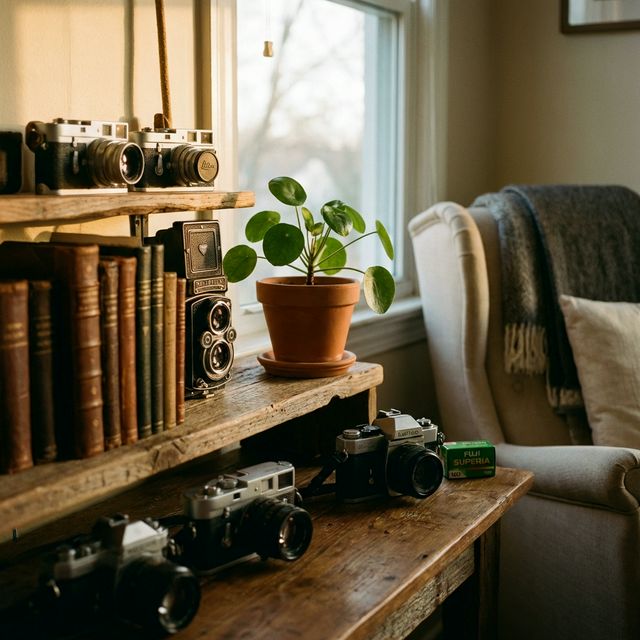
There is a difference between consuming a hobby and cultivating it. Consuming is opening whatever the algorithm places in front of you. Cultivating is returning intentionally. Curating resources. Tracking progress. Building continuity.
When your hobby has a dedicated space—clean, structured, intentionally arranged—it stops feeling like background noise. It starts feeling like something you maintain. Time deepens that feeling.
“14 days until the next local concert.”
“365 days since I started learning guitar.”
These numbers are not decorative. They create narrative. They remind you that this interest has history. That it survived weeks when motivation dipped. That you showed up more often than you remember. At some point, the hobby becomes part of your identity.

Design matters more here than we admit.
Many digital tools are optimized for efficiency. Neutral palettes. Sharp grids. Functional layouts. That tone works for invoices and task lists. It does not always inspire creativity.
A hobby space should feel calm. Considered. Almost protective. When the interface feels intentional, it validates the time you spend there. Rearranging a bookmark should feel smooth. Opening a reference should feel immediate. That tactile responsiveness reinforces ownership.
Context matters too.
Hobbies are seasonal. Cultural. Local. Cherry blossom forecasts. Regional festivals. Community meetups. Concert dates.
A space that recognizes where you are—and what matters around you—feels alive. Not generic. Not interchangeable. Personal.
Speed is equally important.
Hobby moments are often spontaneous. You remember a chord progression you wanted to try. You want to check a camera setting before the light changes. Inspiration is fragile. If the interface lags, the moment passes. Immediacy protects momentum.
Psychological Boundaries
And perhaps most importantly, a dedicated hobby space creates a psychological boundary. In 2026, work and leisure happen on the same devices, in the same browser windows, often at the same desk. Without intention, everything blends together.
But when you open a specific space reserved for your interests, something subtle shifts. Work links fade. Metrics disappear. The atmosphere changes. You are no longer optimizing. You are exploring.
Your passions deserve more than a folder named “Misc.” They deserve a place that feels alive. A place you return to. A place that reflects the care you invest in them.
Not storage.
A sanctuary.